



If you’re sorting this out near A Trusted Dentist in Forrestfield Since 1979 in Forrestfield, this guide walks through what usually happens and what only a check-up can decide.
You may be trying to arrange dental care without paying the whole bill at once. Some Perth dental providers may accept Afterpay for eligible transactions, but acceptance, your available limit and transaction approval need to be confirmed directly before treatment. Keep three decisions separate: what care is clinically appropriate, what the written estimate covers, and whether the payment provider approves the purchase.
Can you use Afterpay for dental treatment in Perth?
You may be able to use Afterpay at a dental provider that currently offers it, subject to the provider’s arrangements and approval of your transaction. Don’t assume a payment logo on an old webpage still applies. Ask the practice to confirm acceptance for your particular treatment and expected amount, then check the current terms shown in your Afterpay account or checkout.
Payment approval doesn’t tell you which treatment you need. That decision belongs in the dental examination, where the dentist can assess your symptoms, oral health, diagnostic findings and suitable options. The next document is an itemised estimate explaining the proposed work. Payment comes third.
A Trusted Dentist in Forrestfield Since 1979 serves people in Forrestfield and the wider Perth area, but current Afterpay availability hasn’t been supplied for this article. Contact the team directly to confirm the payment arrangements that apply on the day. For broader information about examinations and preventive care, see Healthdirect dental care guidance.
What dental costs might be eligible for Afterpay?
Eligibility depends on whether the dental provider currently permits Afterpay for the transaction, the amount available through your account and the conditions applied at checkout. A practice offering Afterpay for one type or value of treatment doesn’t necessarily offer it for every procedure. Confirm the specific transaction rather than relying on a general payment statement.
Depending on a provider’s arrangements, patients might ask about using it for consultations or treatments connected with general dentistry options in Forrestfield, restorative dental treatments, cosmetic dentistry treatment options or Invisalign. These are examples of questions to ask, not confirmation that Afterpay applies to those services.
Request an itemised written estimate before choosing how to pay. It should identify, where relevant:
- the consultation and examination;
- diagnostic work, such as imaging, if proposed;
- each treatment stage;
- laboratory or appliance components;
- review appointments; and
- items that may be charged separately.
If a description is unclear, ask the practice to explain it in plain language.
How does paying a dentist with Afterpay work?
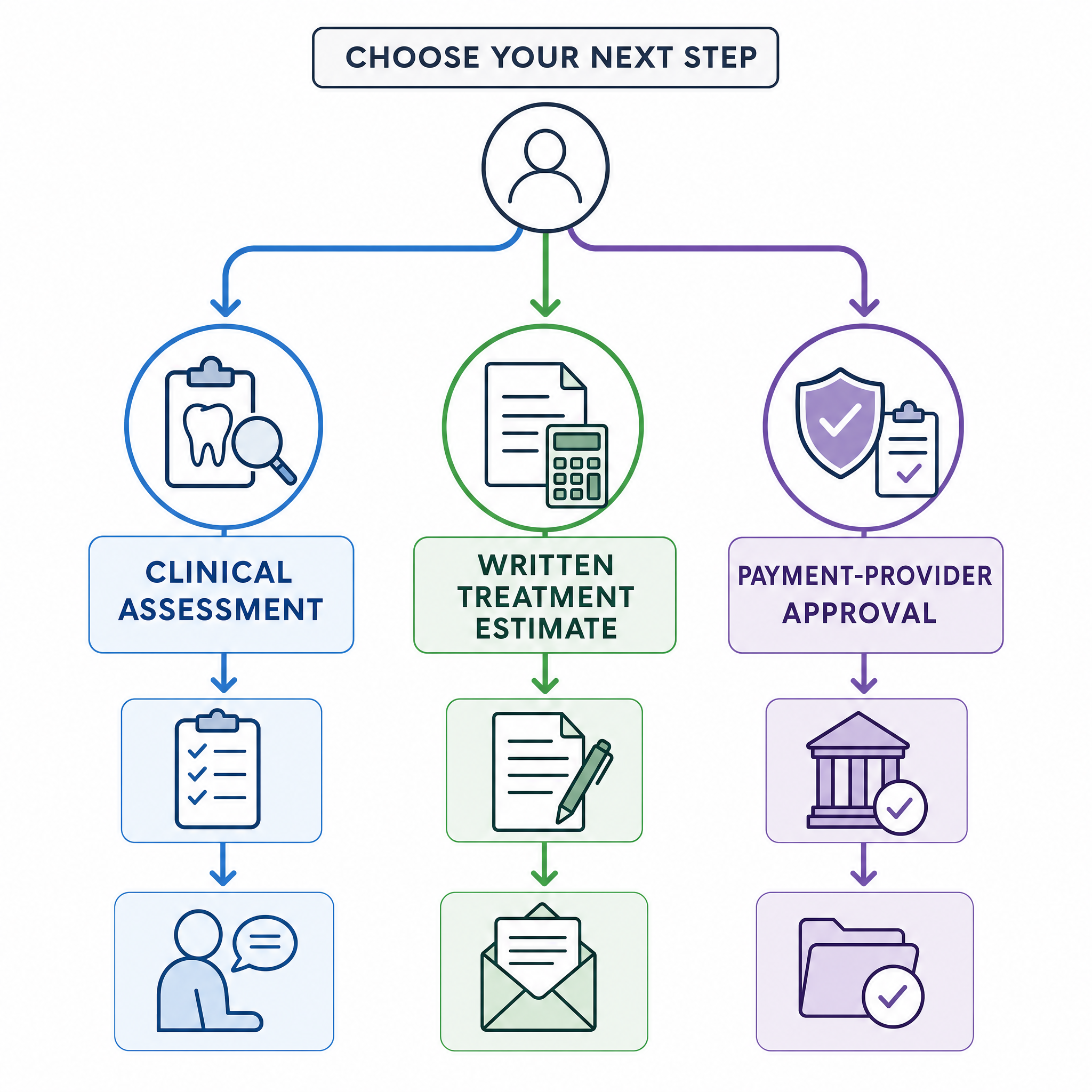
The usual sequence is to confirm that the dental provider accepts Afterpay for your proposed transaction, obtain a written treatment estimate, check your account eligibility, review the repayment schedule displayed to you and complete payment through the provider’s approved checkout. Afterpay controls account and transaction approval; the dentist controls the clinical recommendation. One doesn’t approve the other.
A practical sequence looks like this:
- Have the relevant examination and discuss the available treatment options.
- Obtain an itemised estimate rather than relying on a verbal total.
- Ask whether Afterpay is currently available for that treatment and amount.
- Check your available account information and the exact repayment dates shown at checkout.
- Read the current terms covering fees, missed payments, refunds and account restrictions.
- Complete the transaction only if the treatment choice and repayment commitment both make sense for you.
Instalment timing, limits, eligibility rules, fees and missed-payment consequences can change. Check those details with Afterpay’s current primary-source information and the dental provider at the time of payment. The clinic can explain its checkout and refund process, but it can’t approve an Afterpay transaction on the payment provider’s behalf.
What should you check before agreeing to a dental payment plan?
Start with the total proposed cost, what the estimate includes and when each amount becomes due. Then check what happens if care is staged, an appointment changes or the dentist revises the plan after new findings. A payment option should support an informed clinical choice; it shouldn’t determine which procedure you receive.
Use this checklist before agreeing:
- Is the estimate itemised, and how long does it remain current?
- Are consultations, diagnostic work, laboratory components and reviews included?
- Will treatment happen in one visit or several stages?
- Are any alternative treatment options clinically reasonable?
- What are the practice’s cancellation and rescheduling terms?
- How are refunds handled if the plan changes?
- Would a refund return through the original payment method?
- Can the scheduled repayments fit alongside your other expenses?
Only an examination can establish what care may be appropriate for your circumstances. If the plan changes, ask for an updated estimate and written explanation before additional work proceeds where practicable. Australian Dental Association patient resources provide broader oral-health information through the Australian Dental Association resources.
How do Afterpay, health funds and treatment estimates interact?
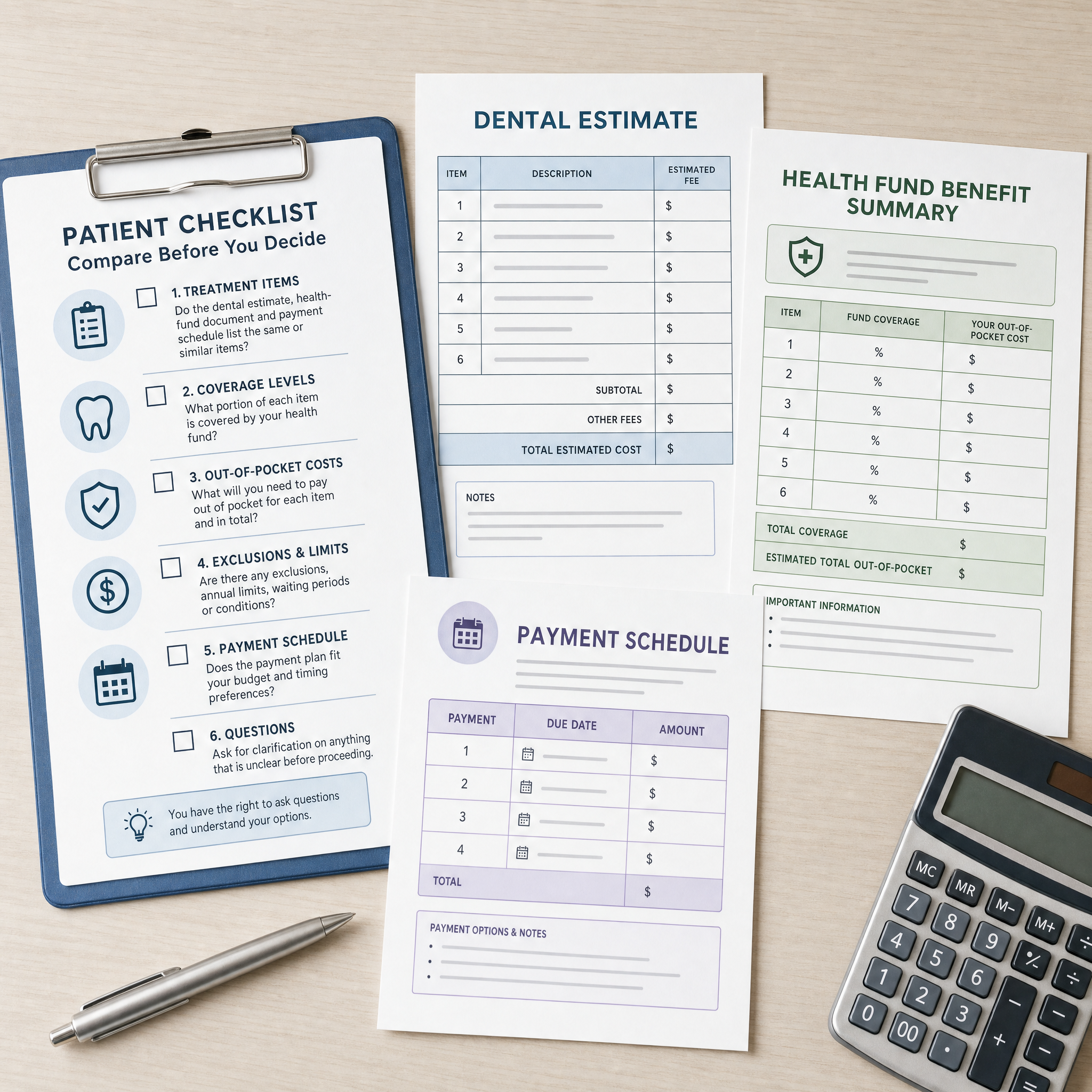
A dental estimate, a possible health-fund benefit and Afterpay approval are separate assessments. The dentist estimates the proposed care, the health fund applies its rules to any eligible claim, and Afterpay decides whether to approve the payment transaction. The figures may be calculated at different times, so don’t treat one as confirmation of the others.
Dental estimate, health-fund benefit and Afterpay approval compared
| Item | Who determines it? | What it tells you | What it does not confirm |
|---|---|---|---|
| Dental treatment estimate | Dental provider | Proposed treatment items and expected charges | Final treatment scope or health-fund benefit |
| Possible health-fund benefit | Your health fund | The benefit it may pay under your cover and rules | The final dental cost or payment approval |
| Afterpay transaction approval | Afterpay | Whether the particular payment is approved | Clinical suitability or insurer benefits |
Work through the numbers in order. First, obtain the itemised estimate. Ask your health fund what benefit may apply to the listed item numbers and whether waiting periods, annual limits or other conditions affect the claim. Confirm the remaining amount with the practice, then ask whether Afterpay is permitted for that transaction.
Keep copies of the estimate, fund response, receipt and payment schedule. If you’re considering aligner treatment, the practice’s explanation of factors affecting Invisalign costs in Perth can help you identify questions about records, treatment scope and follow-up care.
Could the treatment plan or final cost change?
Yes. An estimate can change if an examination, diagnostic finding or response during treatment alters the recommended care. Where practicable, the dentist should explain the new finding, the available options and the cost implications before additional work occurs. Ask for an updated written estimate when the scope changes rather than trying to reconcile the difference later.
This can occur when care is staged. The dentist may need to complete an early stage and assess the result before confirming what follows. There may also be a choice between treating an immediate clinical problem and considering elective work separately. Suitability depends on your examination; a webpage can’t settle that choice.
In the chair, the useful discussion is concrete: what was found, what needs attention now, what could wait, what alternatives exist and which charges belong to each stage. At A Trusted Dentist in Forrestfield Since 1979, you can ask the treating dentist to walk through those points against the itemised estimate. No clinician quotation or individual outcome is assumed here.
If the plan changes after an Afterpay transaction, ask both the practice and payment provider how any adjustment or refund will be processed. Don’t assume it will operate like a cash refund.
Questions to ask a Forrestfield dentist before paying
Ask direct questions about the treatment, estimate and payment process while you still have the documents in front of you. The most useful answers will relate to your proposed care and transaction, not a general statement that a payment method is available. Written confirmation gives you something clear to check later.
Questions to confirm before using Afterpay for dental care
| Question | Why it matters |
|---|---|
| Do you currently accept Afterpay for this treatment? | Acceptance may depend on the service or transaction. |
| Is there a transaction limit applied by the practice? | A provider may have conditions separate from your account limit. |
| What does my written estimate include and exclude? | This identifies possible additional charges. |
| Could the treatment be completed in stages? | Staging may affect timing and separate payments. |
| When is each amount due? | The dental schedule and repayment schedule may differ. |
| How are refunds or changed plans handled? | Adjustments may need to pass through the original payment method. |
| What happens if the proposed care changes after examination? | You may need an updated clinical plan and estimate. |
The Forrestfield team provides listed services including general dentistry, restorative care, cosmetic dentistry and Invisalign. That service list doesn’t confirm Afterpay eligibility. Contact the practice to check its current payment arrangements, then discuss which treatment options may suit your needs after an examination.
Frequently Asked Questions about Afterpay and dental care
These short answers cover the questions people commonly raise when comparing dental estimates and instalment payments. Exact acceptance, account limits, insurer benefits and transaction approval can vary, so confirm the details that apply to you directly with the dental provider, your health fund and Afterpay.
Does every Perth dentist accept Afterpay?
No. Each provider chooses its payment arrangements, and those arrangements can change. Ask whether Afterpay is accepted for your proposed treatment and transaction amount before the appointment or payment date.
Is Afterpay approval assured?
No. Afterpay controls account eligibility and transaction decisions. A dentist can confirm whether the practice offers the checkout option, but can’t promise that the payment provider will approve your purchase.
Can Afterpay be combined with a health-fund claim?
It may depend on the practice’s claiming and payment process, your insurer’s rules and the transaction itself. Ask the health fund about your possible benefit first, then confirm the remaining amount and payment process with the practice.
What happens if my dental treatment changes?
Ask the dentist for an explanation and updated estimate. If a payment has already been processed, ask how any extra charge, adjustment or refund would be handled through the relevant payment method.
Can urgent dental care wait while I arrange payment?
Don’t delay contacting a dental professional solely while organising finance if you have urgent symptoms or are worried about a dental problem. Describe what’s happening to the practice promptly so a dental professional can advise on assessment timing. A webpage can’t diagnose how urgent your situation is.
A final point before you choose
Afterpay is a way to process an eligible payment, not a clinical recommendation or a final statement of cost. Get examined, understand the proposed care, read the itemised estimate and check possible health-fund benefits before committing to a repayment schedule. Then verify the provider’s current Afterpay arrangements and the exact terms presented for your transaction.
This information is general and doesn’t replace advice based on your dental history, examination and circumstances. Consult a dentist for individual advice about symptoms, treatment options, likely costs and appropriate timing.


